
Thomas Jefferson’s Cipher #3
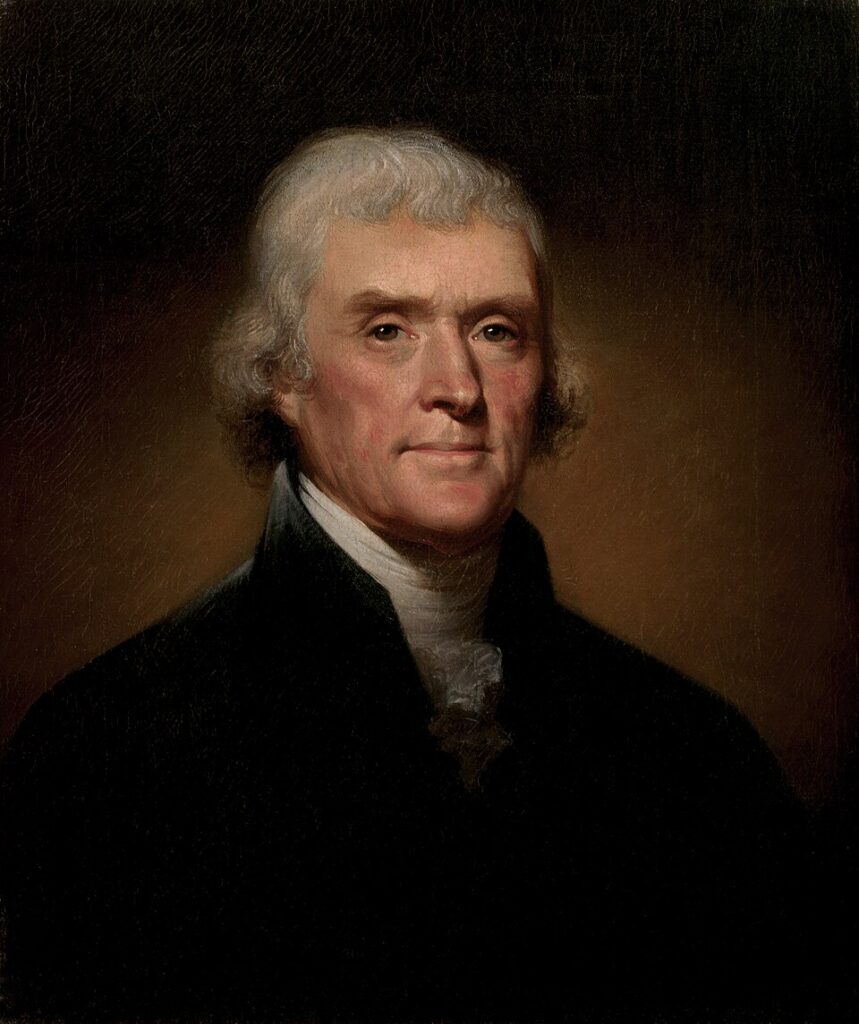
🇺🇸 MISSION BRIEFING: THE JEFFERSON CIPHER
SUBJECT: Thomas Jefferson
3rd President of the United States
Service: 1801–1809
Author of the Declaration of Independence
Architect of the Louisiana Purchase
Founder of the University of Virginia
THE SITUATION
Year: 1792
The United States is fragile. Europe is watching. Letters are intercepted. Diplomats are followed.
Thomas Jefferson, serving as Secretary of State, suspects that foreign postal agents are secretly opening American correspondence.
If the message can be read, the nation is vulnerable.
So Jefferson designs a solution.
Not ink.
Not invisible writing.
A machine.
A mechanical encryption device made of rotating letter wheels.
When aligned properly, it reveals English.
When misaligned, it becomes chaos.
Nearly 150 years later, the U.S. Army would adopt a version of this idea as the M-94 Cipher, using it through World War II.
Today, you will reconstruct Jefferson’s invention.
YOUR MISSION
You are a colonial diplomat operating under secrecy.
You must:
Construct a working Jefferson Cipher wheel
Encrypt a classified presidential message
Decrypt intercepted government codes
Protect national security
MATERIALS
• 1x 3D Printed Cylinder
• 1x 16-Column Cipher Sheet
• Scissors
• Tape
PART 1: ENGINEERING THE DEVICE
Step 1 – Precision Matters
Carefully cut out all 16 vertical strips.
If letters are uneven, your device will fail.
This is engineering.
Step 2 – Organize
Lay strips in numerical order:
1 – 2 – 3 – 4 – … – 16
Step 3 – Assembly
Wrap Strip #1 around the left side of the tube. Letters facing outward.
Add Strip #2 next to it.
CRITICAL:
The top number row must align perfectly straight across.
If one strip is higher or lower, the encryption breaks.
Repeat until all 16 strips are attached.
You have now built an 18th-century encryption machine.
PART 2: TRAINING – ENCRYPT YOUR OWN MESSAGE
Compose a 16-letter message.
Example:
ATTACKATDAWNXX
Spin the strips until the message appears in one clean horizontal row.
Now choose ANY other row on the cylinder.
That row will look like nonsense.
Example:
XJQPZMTWQLKABHYR
Write that down.
That is your ciphertext.
Pass it to another diplomat.
PART 3: PRESIDENTIAL CHALLENGE
Jefferson has sent intercepted codes.
Your team must decode them.
To decode:
Spin the strips until the given code appears in one row.
Search the other rows.
One row will reveal the real message.
🇺🇸 PRESIDENTS DAY INTERCEPTS
Jefferson may have sent messages such as:
LIBERTYANDJUSTICE
WEHOLDTHESETRUTHS
LIMITEDGOVERNMENT
RELIGIOUSFREEDOM
CONSENTOFPEOPLEX
NATURALRIGHTSUSA
EDUCATIONFORALL
POWERTOPEOPLEUSA
KNOWLEDGEISPOWER
FREEDOMFOREVERUSA
Each is exactly 16 letters.
Each can be encrypted.
Each must be decoded.
🧠 INQUIRY CHALLENGE
If every team builds the same wheel in the same order (1–16),
How secure is the system?
What if:
• You rearranged the strip order?
• You removed one strip?
• You agreed on a secret strip order beforehand?
• You changed which row you use as the “cipher row”?
Would that increase security?
Why?
🔐 HIGH-LEVEL THINKING: FROM JEFFERSON TO CYBERSECURITY
Thomas Jefferson’s cipher wheel was not just a clever invention. It represents one of the earliest examples of what we now call key-based encryption.
In Jefferson’s system, the security did not come from hiding the device. Anyone could build the wheel.
The security came from something else:
The order of the strips.
If two people shared the same strip order, they could read each other’s messages.
If they did not share the same order, the message became meaningless.
That strip order is what we now call a key.
🧠 Modern Encryption Works the Same Way
Today, when you:
• Log into a website
• Send a text message
• Use online banking
• Connect to WiFi
• Unlock your phone
You are using encryption.
Modern systems use mathematical algorithms instead of wooden wheels, but the idea is identical:
A message is transformed into unreadable data unless the receiver has the correct key.
Without the key, even the most powerful computer only sees nonsense.
🔑 Symmetric Encryption
Jefferson’s cipher is an example of symmetric encryption.
Both people must have:
• The same device
• The same strip order
• The same agreed-upon method
This is similar to how early computer encryption systems worked.
The challenge:
How do you securely share the key in the first place?
If someone steals the key, the system is compromised.
🔐 Public Key Encryption (Modern Upgrade)
Today, we often use public key encryption.
Instead of one shared key, there are two:
• A public key anyone can use to lock the message
• A private key only one person can use to unlock it
Jefferson did not have the mathematics for this in the 1790s, but the core concept of protecting communication is the same.
🚨 Cybersecurity Connection
Think about this:
If another team rearranges their strip order secretly, even though the wheels look identical, you cannot read their message.
This mirrors:
• Password protection
• Encryption keys
• Secure messaging apps
• Military communications
• Blockchain security
The strength of the system depends on the secrecy of the key, not the visibility of the tool.
🧩 Reflection Questions
If everyone in the classroom knows the strip order, is your communication secure? Why or why not?
Is it safer to hide the machine or hide the key?
Why do modern systems use extremely long encryption keys?
What might happen if a government’s encryption key is stolen?
How is rearranging your strip order similar to creating a stronger password?
💡 Final Insight
Jefferson’s cipher wheel teaches an important lesson:
Security is not about complexity alone.
It is about controlled access to the key.
In 1790, that key was the strip order.
In 2025, that key might be a 256-bit cryptographic algorithm.
Different technology.
Same principle.