
Drone Coding Cadets: Programming Autonomous Flight :: March 21, 2026
🚁 Apex Drone Navigator Challenge: Echo Edition!
Welcome, drone pilots and coders!
Your mission is to use block coding at https://echo.pitsco.com to program your Apex drone to fly a pattern. You’ll begin with a basic “square-shaped” flight and move on to more complex designs using loops and functions.

🎯 Mission Brief
Part 1: Start by coding your drone to fly:
- Square pattern
- L-Shape pattern
- Square pattern using Loops in the code
Then, challenge yourself with more advanced patterns! How about a zigzag pattern?
(Tip: If your drone doesn’t spin exactly 90°, try adjusting time or speed on the spin block.)

🧰 What You’ll Need
- Fully charged Apex Drone
- Laptop or tablet with https://echo.pitsco.com open
- An open flying area
- A curious mind and a willingness to experiment!
Part 2:
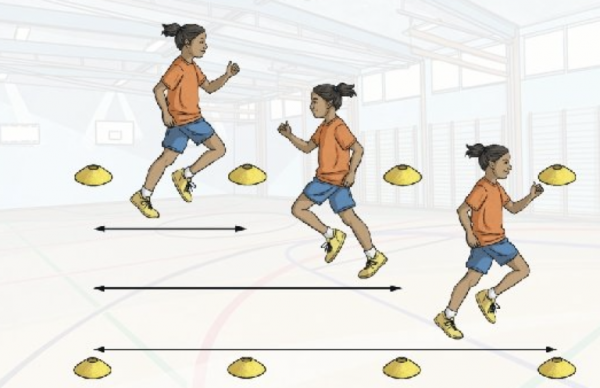
Write and implement a code that commands your drone to take off and fly forward and return 3 times. Each time your drone must increase its flight distance by an increment of 12 inches.
Part 3:
This activity challenges you to be the architect of your drone’s flight! Using your drone and the Echo programming environment, you will design and implement a unique flight path to achieve a specific goal. This is your chance to think creatively and apply what you’ve learned about drone commands to solve a real-world inspired problem.
Part 4: Share!
Take a picture of your code or a video of your drone flying the programmed flight and post it on the Padlet below.
Part 2: Drone Dance Challenge 🎶🛸
Your Mission: Create an amazing drone dance routine choreographed to your AI-generated music.
Think About It:
- How can drone movements reflect the mood and beat of your music?
- What story can your drone(s) tell?
Phase 1: Listen & Plan
Analyze Your AI Music:
- Play your song from Google Music FX. What’s the BPM? (e.g., 120 BPM means 2 beats per second).
- Listen for changes: Does it get faster or slower? Are there big moments like a beat drop or a quiet part?
- Brainstorm drone moves: What can your drone do?
- Hover (stay in one spot)
- Rise / Fall (go up / down)
- Spin (turn left / right)
- Fly Forward / Backward / Left / Right
- Flips (if your drone can and it’s safe!)
- Light changes (if your drone has lights you can control)
Storyboard Your Dance:
- On paper or a whiteboard, sketch out your drone’s moves alongside a timeline of your music.
- Use the BPM to time your moves. For example, if a move should last for 4 beats at 120 BPM, that’s 2 seconds (4 beats/120 beats/minute×60 seconds/minute=2 seconds).
- Safety Check: Plan your flight area. Make sure it’s clear of people and obstacles! Know your emergency landing procedure.
Phase 2: Choose Your Style & Practice
Option A: Manual Flight (Freestyle Flyers)
- If you’re flying manually, assign a pilot (or pilots for multiple drones).
- Practice basic drone controls first if you’re new.
- Rehearse your planned moves with the music. Focus on timing your actions to the beat (BPM). Communication is key!
Option B: Coded Flight (Drone Programmers)
- Use your drone’s programming software https://echo.pitsco.com/
- Translate your storyboard moves into code. Use the BPM to set the duration for each movement command.
- Example (conceptual):
move_forward(distance, speed)orwait(seconds)where seconds are calculated from your BPM and desired number of beats.
- Example (conceptual):
- Test small parts of your code. Fix any bugs (debugging!).
Practice & Refine (All Groups):
- Run through your whole routine. Does it look good? Is it synced? Is it safe?
- Get feedback from other groups!
- Make changes to your plan or code. If you have multiple drones, practice flying together smoothly.
Phase 3: Showcase and Share!
- Perform your drone choreography for everyone!
- After your performance, tell us:
- What creative ideas did you have?
- How did the BPM of your song help you plan the drone’s moves?
- If you coded, what was one interesting part of your code or a challenge you solved?
- Post your performance on the Padlet below
Explore Further (Careers & Fields): This activity touches on:
- Robotics Engineering: Designing and building robots (like drones!).
- Software Development/Computer Science: Writing the code that tells drones what to do.
- AI in Music & Arts: Using AI to create, like you did with Music FX, and integrating tech into performances.
- Aerospace Engineering: The science of flight.
- Event Production & Entertainment Technology: Creating amazing shows (like drone light shows!).
Have fun and be creative! Let’s see those drones dance! 🕺💃🛸